
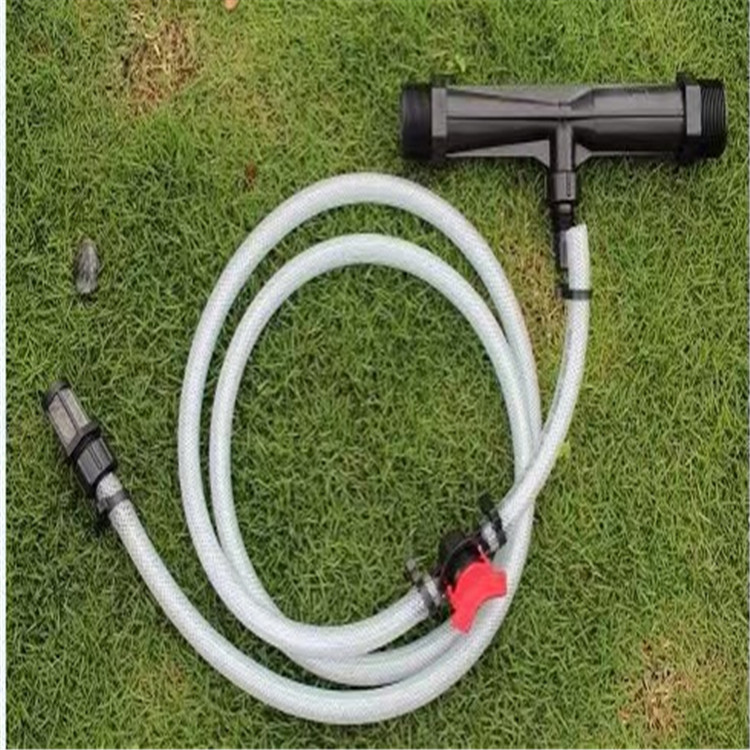
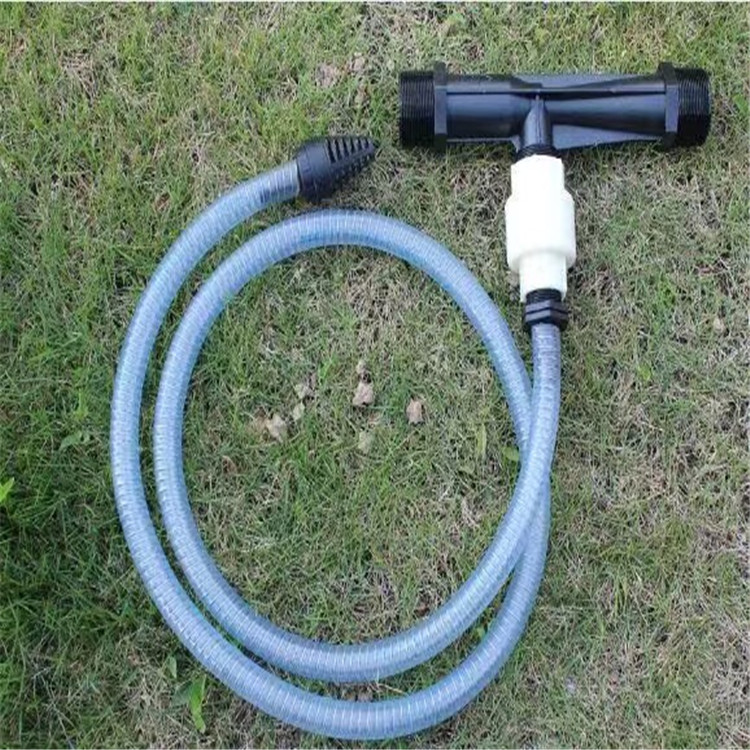
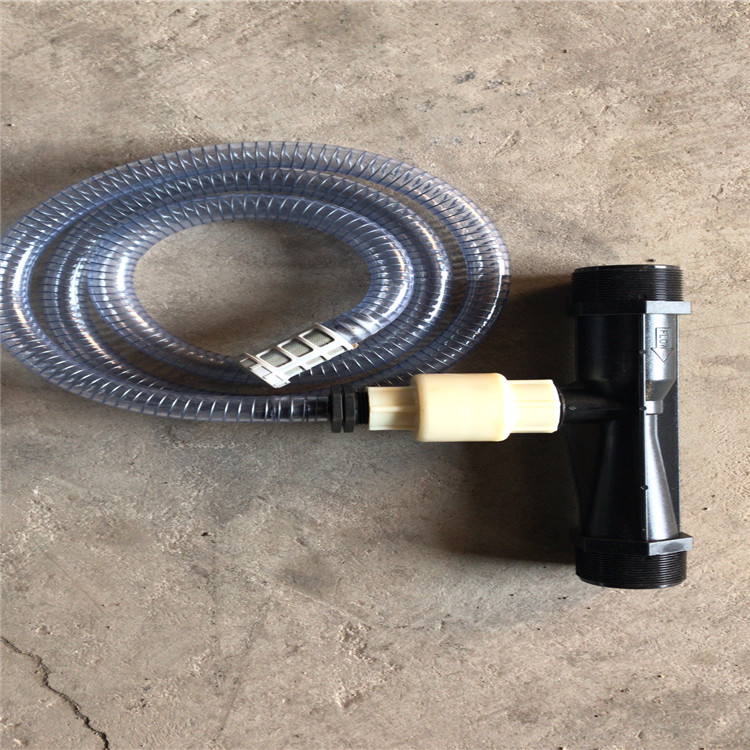
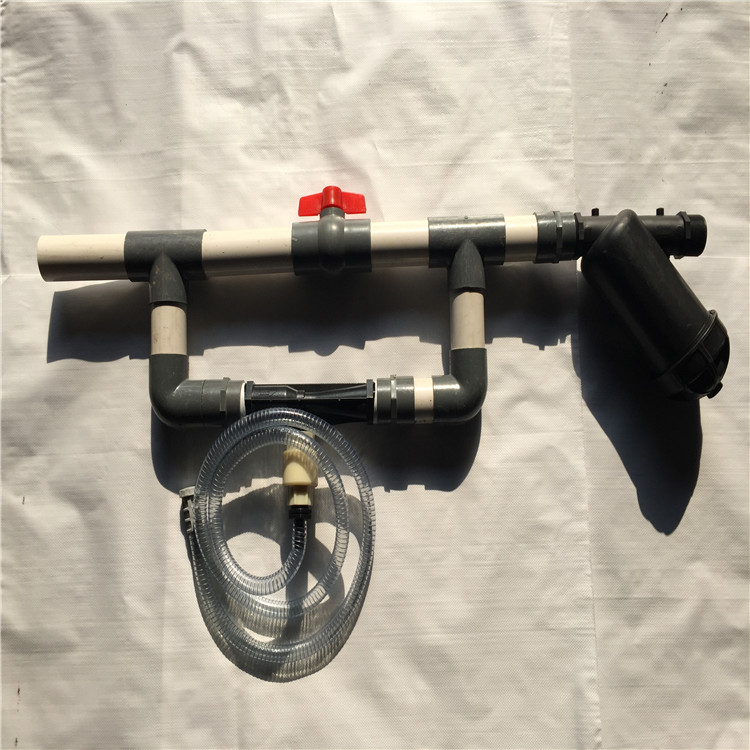
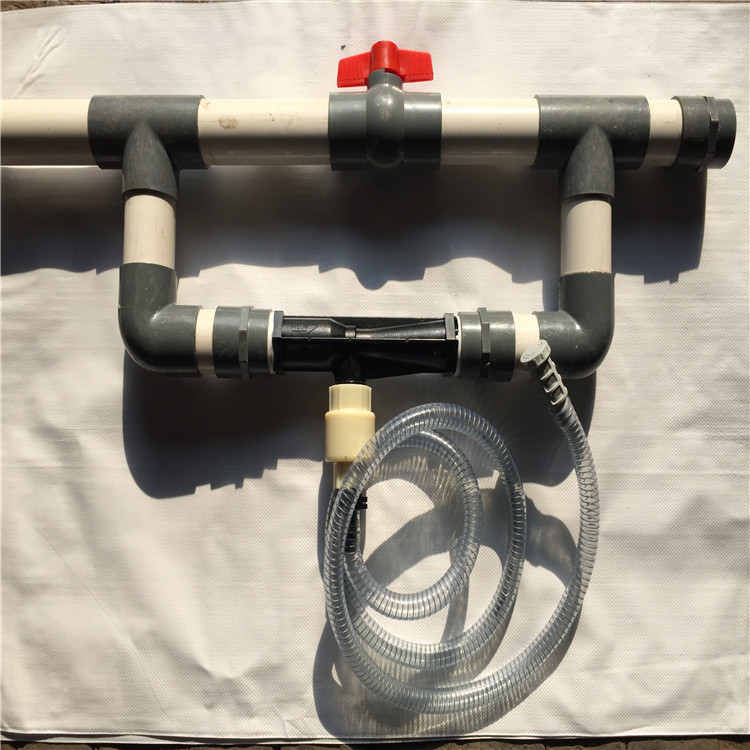
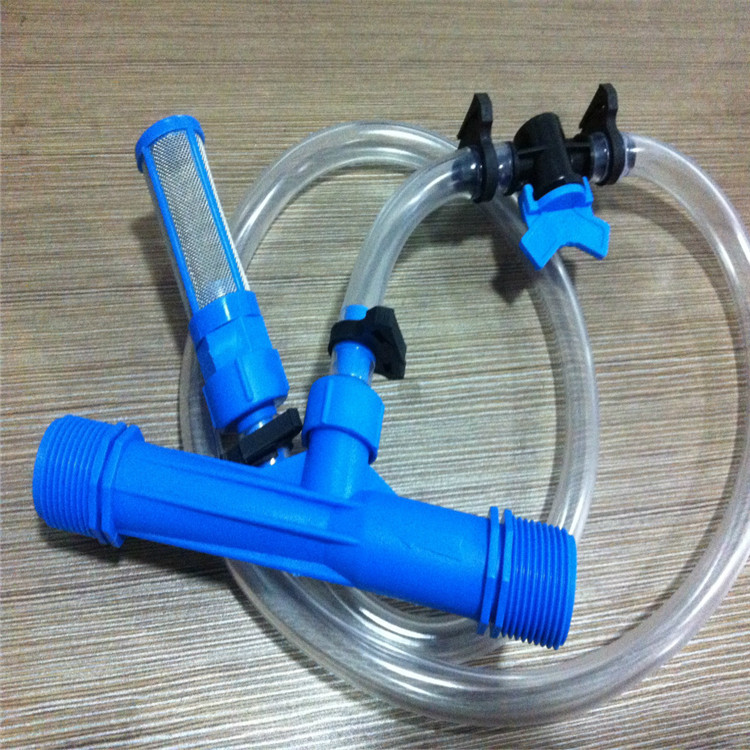
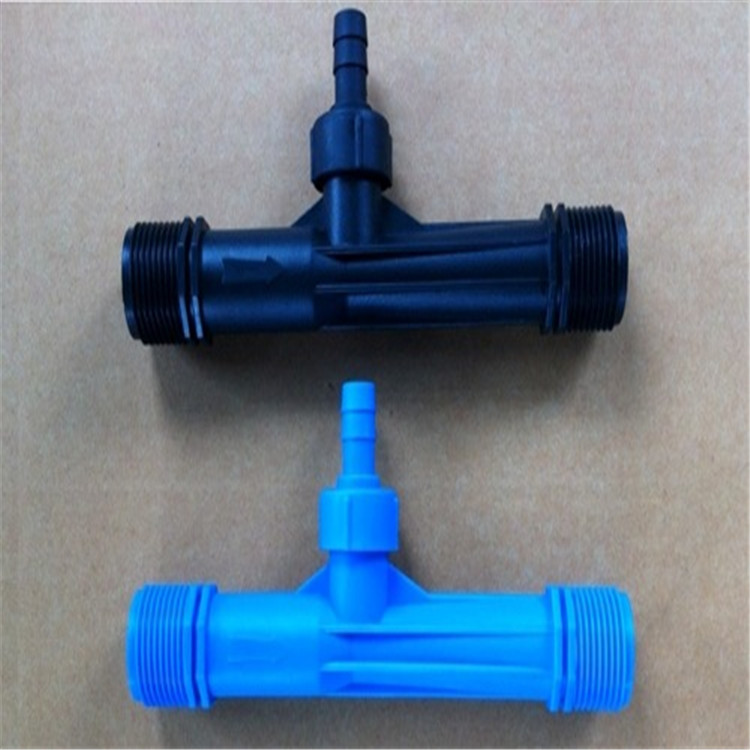
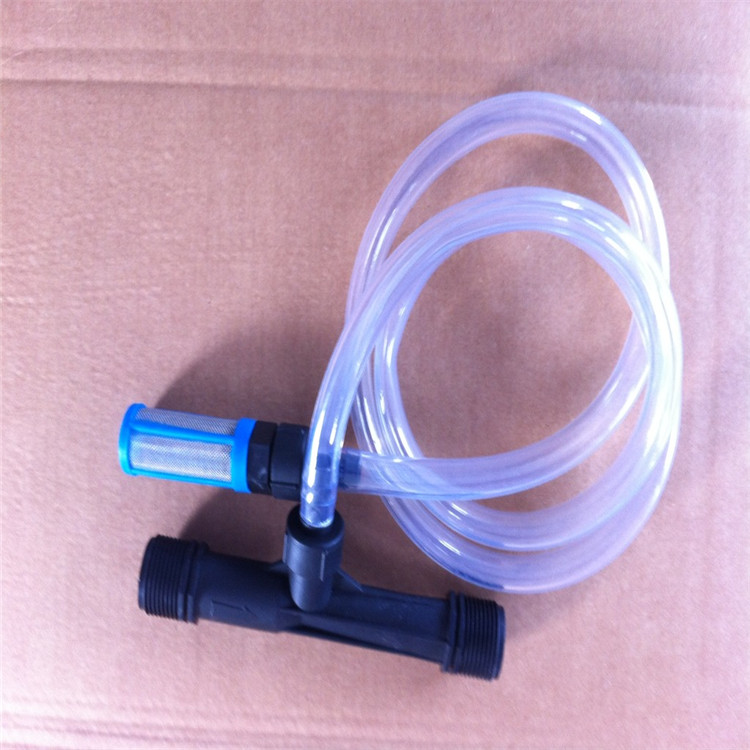
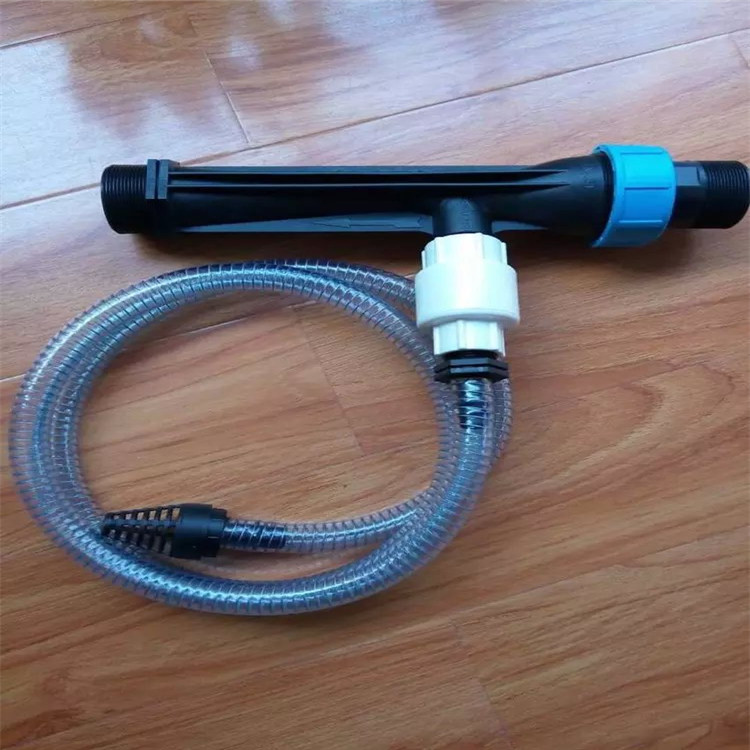
Operation and control principle of water and fertilizer integrated machine equipment:
1. Fertilization process:
First, add the dissolved fertilizer liquid to the fertilization can, turn on the main water pump, fill the tank with water through the regulating valve door, and close the water injection valve (the irrigation valve can be kept open during the process). When fertilizing, adjust the required fertilization time through the "time knob" in the control cabinet, start the injection pump, the fertilizer in the tank is injected into the main pipeline water through the injection pump, and the fertilization work is completed at the same time. The flow rate of the injected fertilizer can be adjusted through the "graduated adjustment valve". During this process, the pressure control of the injection pump will start and stop the water pump by itself according to the water outlet pressure, which can not only inject the fertilizer liquid into the farmland at a constant speed, but also protect the injection pump.
2. Pump start-stop control:
Both the main water pump and the injection pump can adjust the running time of the equipment through the "time knob", and automatically stop when it runs to the specified time. The water inlet of the equipment is equipped with pressure control equipment. When the pipeline is blocked (such as the filter is blocked), the pressure in the pipeline is too large, and the main water pump will be automatically cut off. Fertilizer tank is equipped with a liquid level sensor. When the fertilizer liquid in the fertilizer tank has been pumped out, the power supply of the injection pump will be automatically cut off. The above two designs both protect the water pump.
3. System filtration:
This equipment has two layers of filtration design. A filter is installed at the outlet of the fertilizer applicator to filter the fertilizer liquid once. A filter is also installed at the outlet of the equipment to filter the entire fertilizer water twice.
4. Equipment stop:
A one-way check valve is installed at the water inlet of the equipment to prevent the backflow of fertilizer water from polluting groundwater; a one-way check valve is also installed in the outlet pipe of the fertilizer applicator tank to prevent the backflow of water from the main road to ensure the normal operation of fertilization work.
5. Traffic statistics:
An electronic flowmeter is installed at the water outlet of the equipment to count single or cumulative water and fertilizer amounts.
6. System slag discharge:
7. A slag discharge hole is provided at the bottom of the side of the fertilizer can for slag discharge and cleaning the fertilizer can
The general situation of the development of water and fertilizer integration technology, the problems existing in the research and popularization and application, the characteristics and adaptation range of sprinkler irrigation, the principle and basic parameters of spraying, the main equipment of sprinkler irrigation, the design requirements and layout, the characteristics and classification of micro-irrigation, the principle and basic parameters of micro-irrigation, the equipment of micro-irrigation, engineering design, operation and, the fertilization characteristics of water and fertilizer integration, equipment and fertilizer selection and preparation, etc. The second part is the application of water and fertilizer integration technology in agricultural production. Specifically enumerates the technical regulations for water and fertilizer integration of corn, wheat, potato, soybean, sugarcane, tea, cotton, rape, grape, banana, lychee, watermelon, citrus, apple, leafy vegetables, nightshade fruits and melon vegetables.
8. The water-fertilizer integrated machine integrates irrigation and fertilization. The water-fertilizer integrated equipment uses pressure (or natural terrain drop) to mix soluble solids or fertilizers according to the soil nutrient content and crop fertilizer requirements. After blending with irrigation water, controlled pipes are used to form drip irrigation through pipes and drippers, and the root development and growth areas of crops are evenly, regularly, and quantitatively, so that the main root soils have always been loose and suitable for water content.


